The short answer
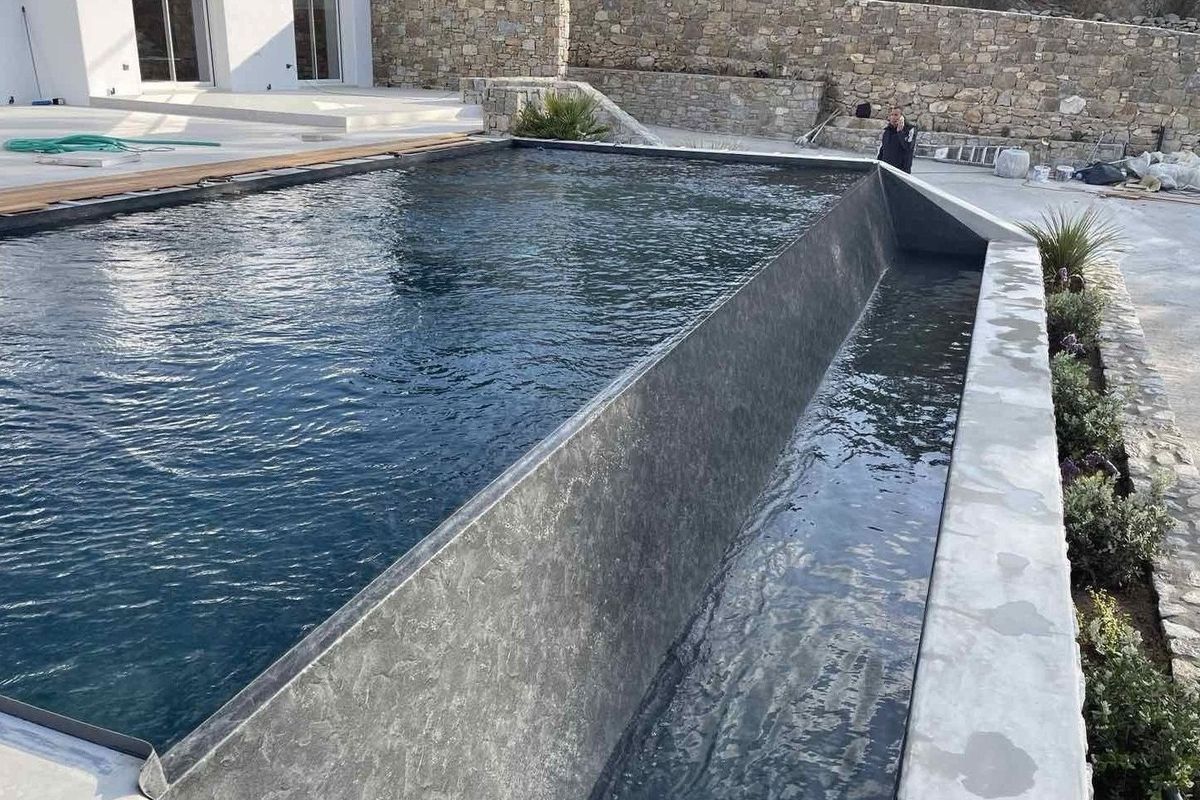
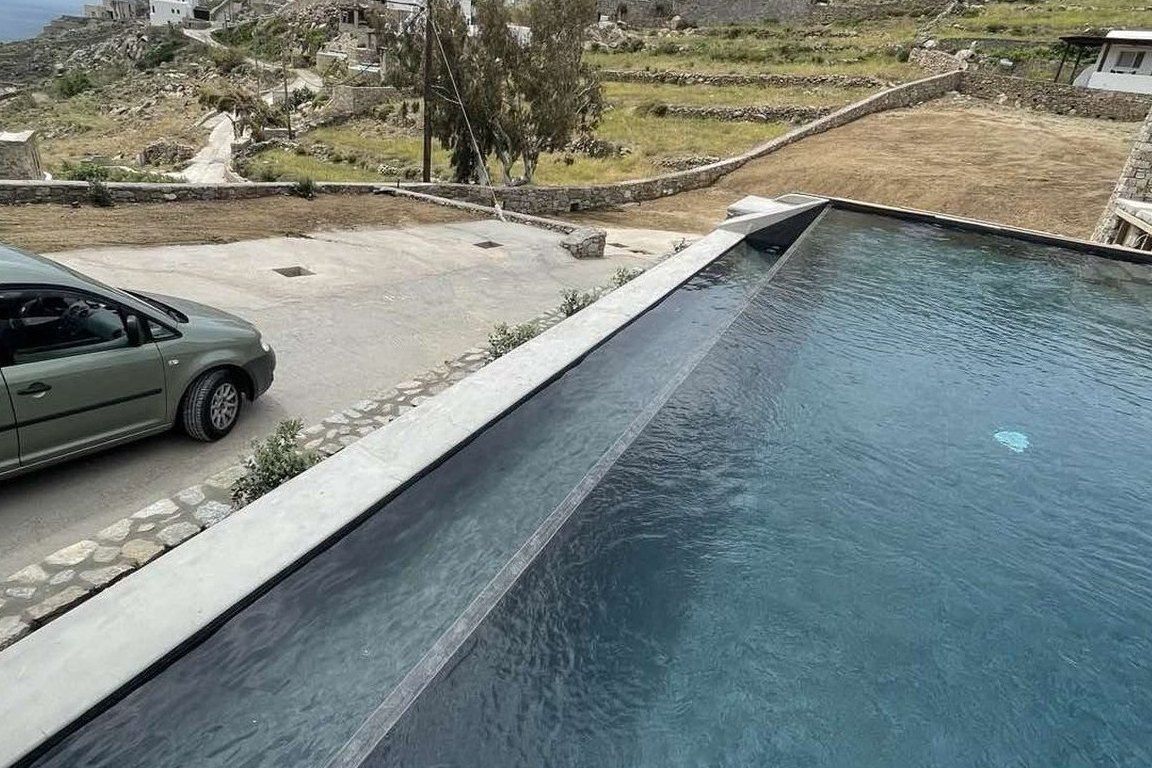
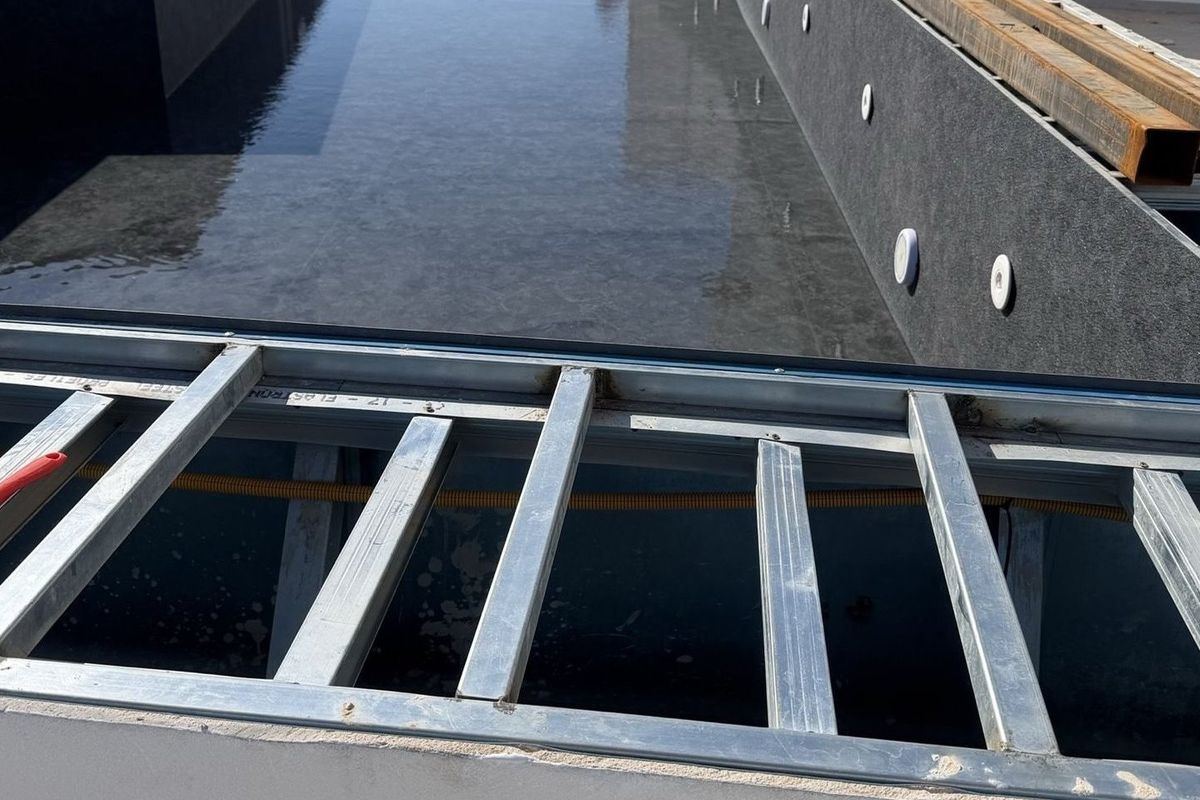
A prefab overflow pool has its water level at the edge. Water falls into a gutter with a grating, collects in a balance tank and returns filtered. It suits plots with a view, such as in Penteli, Saronida or Varkiza.
How it works
Instead of skimmers, an overflow pool has a gutter on one or more sides. The pump keeps pushing water into the pool, the level rises to the edge and the excess falls into the gutter. From there it goes to a balance tank, where the pump draws it again.
The advantage, beyond the look, is that the surface is constantly skimmed: leaves and dust fall into the gutter before they can sink.
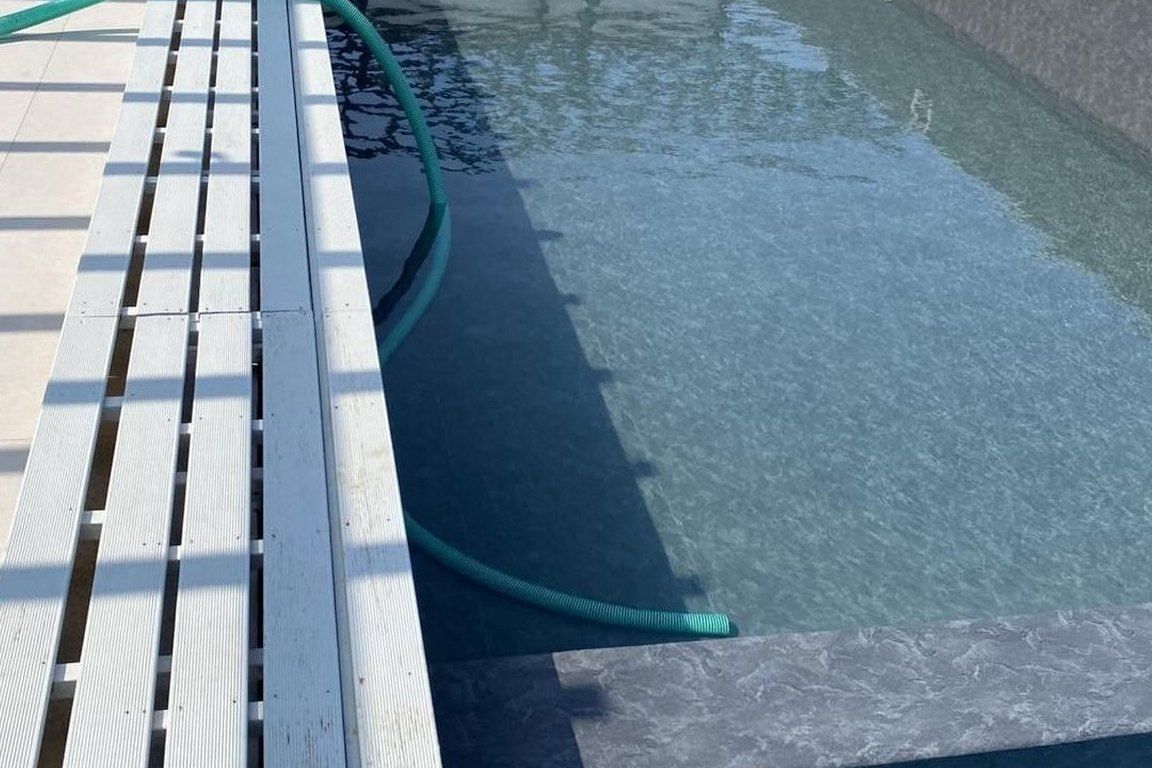
The balance tank
When people get into the pool, they displace water, which falls into the gutter. When they get out, the level has to refill. The balance tank holds that water. We bury it next to the plant room, with an automatic float for topping up.
Where it makes sense
Overflow on one side, facing the sea or the city, gives the «infinity» effect. Overflow on all sides makes the pool look like a mirror set in the floor, and suits modern houses even without a view.
On sloping plots the overflow goes on the lower side, where there is already a retaining wall. See also the pool on a sloping plot.
What to know before deciding
- It needs a slightly larger plant room and a tank.
- The pump runs longer. A variable-speed pump keeps consumption low.
- A dark membrane strengthens the mirror effect.
From our experienceIn Attica the meltemi can push water into the gutter faster than the pump replaces it. We allow for this in the size of the tank.