
The short answer
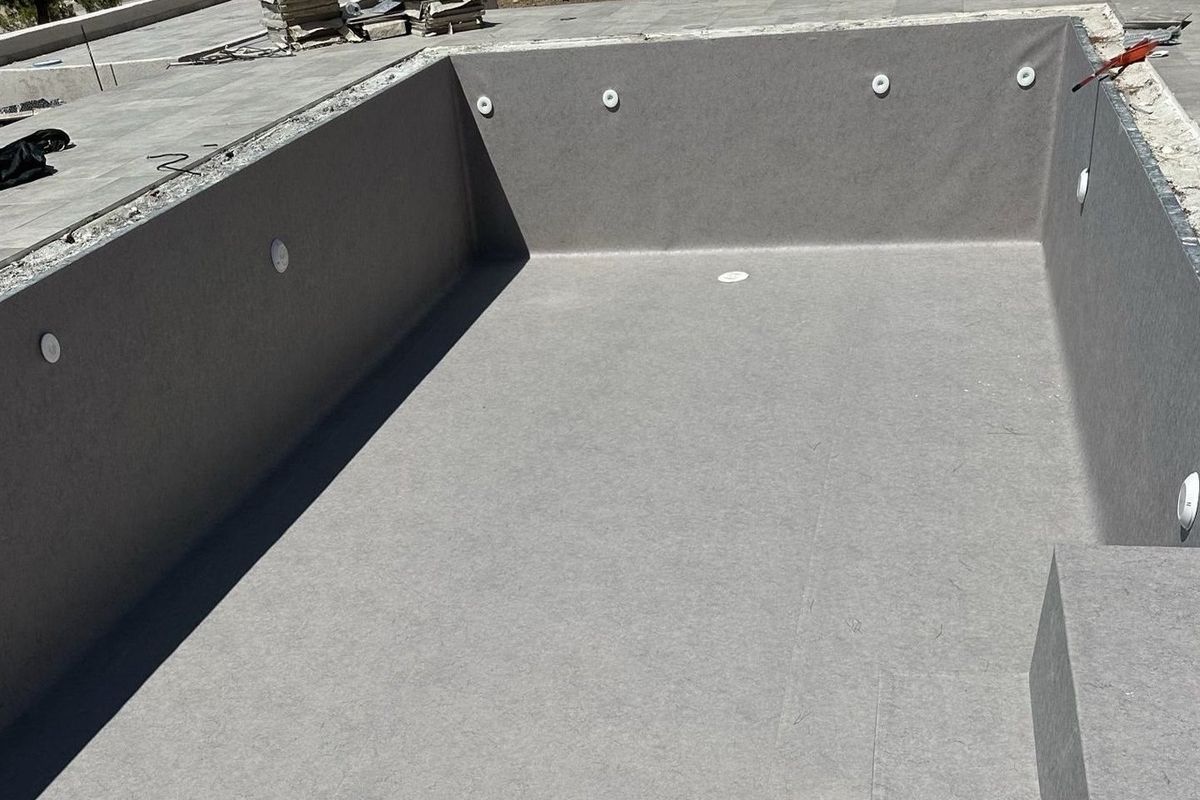
An old concrete pool with leaks or worn tiles is usually renovated with a Haogenplast PVC membrane laid and welded over the existing shell. The membrane seals, changes the look and has a ten-year warranty.
When renovation is worth it
If the pool is losing water, the tiles are coming off, or the grout turns black however much you clean it, a membrane is usually the most sensible answer. The shell must be structurally sound: small cracks are fine, large movements need an engineer first.
How it is done
- We empty the pool and inspect the shell.
- We remove anything that sticks out and smooth the surfaces.
- We lay a geotextile underlay for protection.
- We fix a profile along the edge and lay the membrane.
- We heat-weld the joins and check every seam.
- We replace the fittings (skimmer, inlets, lights) with new ones suited to the membrane.
A chance for new equipment
A 30-year-old pool usually has a power-hungry pump and a tired filter. During renovation we suggest a variable-speed pump and LED lights. See the plant room.
Pools built by others
We also take on membrane pools built by other companies, for a membrane change. We first check the walls for rust and the condition of the floor.
From our experienceBefore deciding on a renovation, do a simple test: mark the water level one evening with the pump off and look again in the morning. If it has dropped much more than evaporation would explain, you have a leak.


